Artists: Tomáš Jetela (CZ) / Gian-Battista Lombardo (FR)
Curator: Anna Rémuzon (FR)
Galerie am Lieglweg – Neulengbach (AT) – Until November 17
See bellow for German version
“I, eternal child,
always watched the passage of the rutting people and did not want
to be inside them, I said – spoke and did not speak, I listened and wanted
to hear them and see into them, strongly and more strongly.
I, eternal child,
brought offerings to others, to those whom I pitied, to those who were far away
or did not see me, the seer. I brought gifts, sent eyes and flickering tremulous
air to meet them, fanned out roads before them, easily traveled,
and – did not speak. Before long, some recognized the silent language
of the one who looks inside and then did not ask questions anymore…”
Egon SCHIELE

The exhibition stands as a tribute to Egon Schiele’s famous poem “I, eternal child”. It’s also a reference to the works of Egon Schiele who introduced his time of maturity in Neulengbach, using a very singular iconography and representation of the faces and bodies… a form of uncanny, genius and sacredness (e.g. the Dead Mother as a Madonna with child)… at the edge of life (youth) and death: “I am a human being – I love Death and I love Life.”
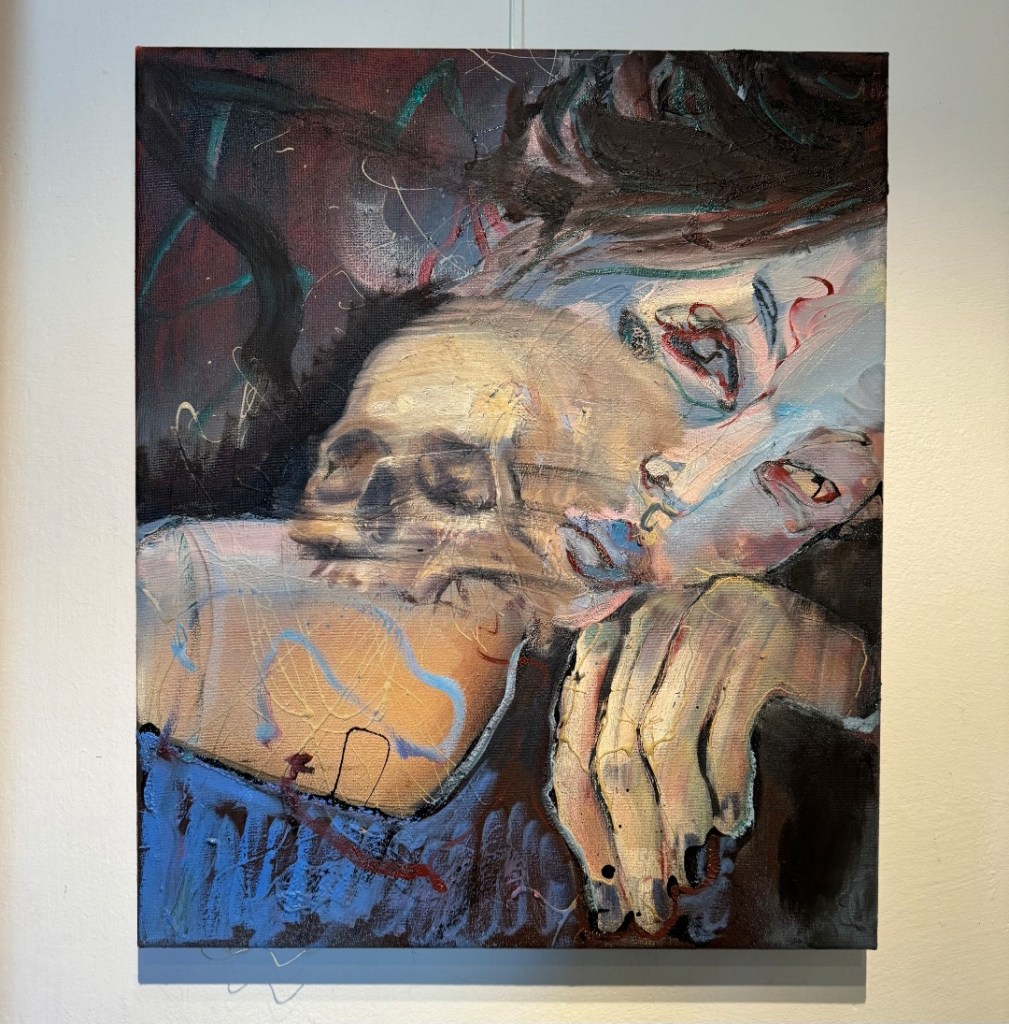
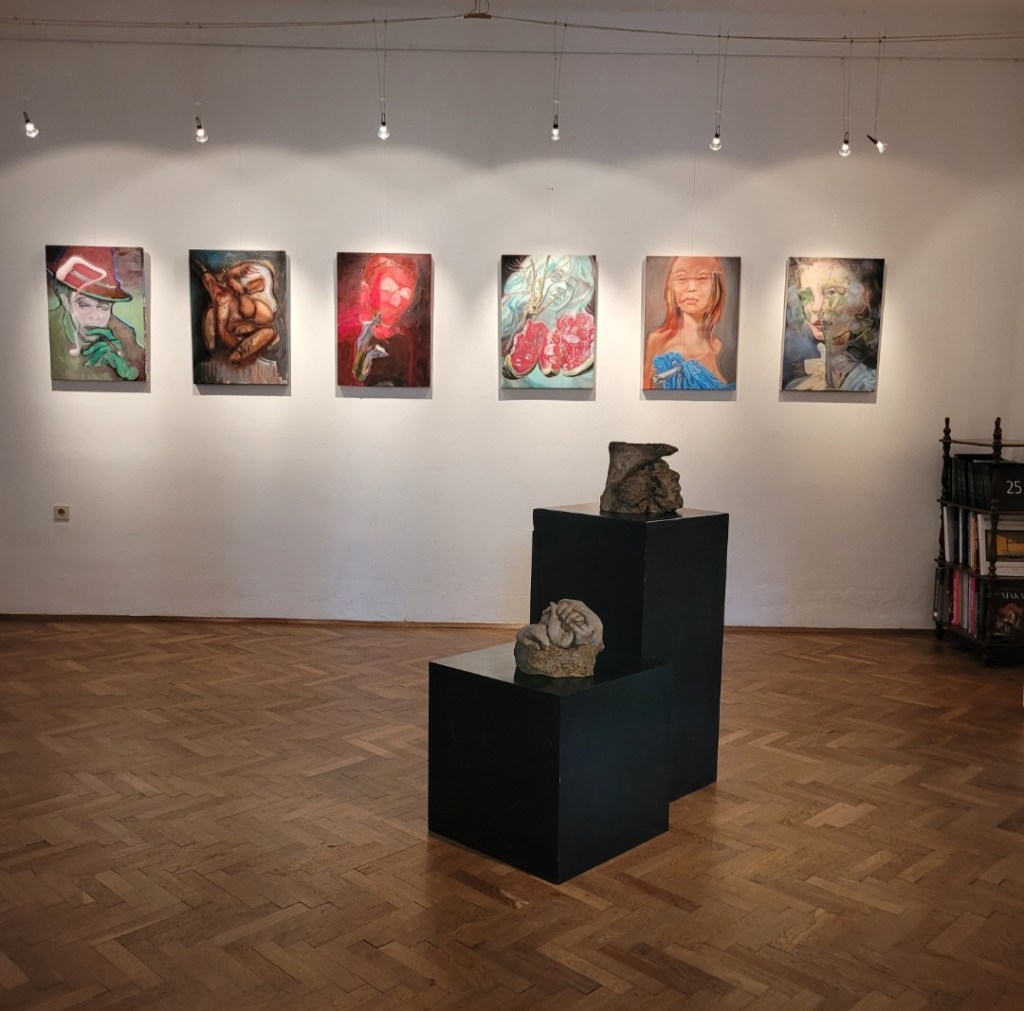
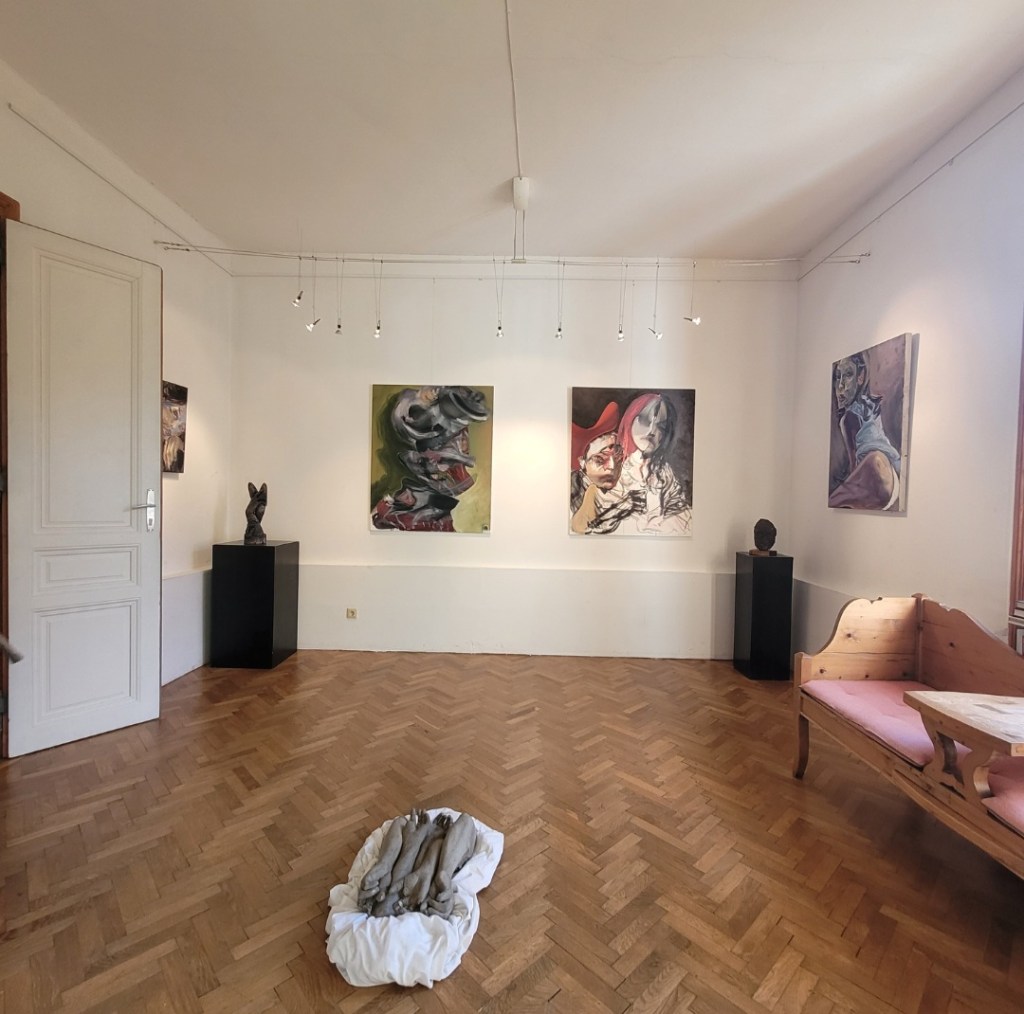
The paintings of Tomáš Jetela actualize the representation of the body as expression of the self, as introduced by Schiele in his time… multidimensional. The figure is at the same time the affirmation of a being and a thing… questioning our place in the world, our conscious and self-consciousness. Through the appearance, it’s a process of introspection… an invitation to dive into the self and reflect on the viewer’s position. It’s about the surface and the depth… the resolution of an existential duality between expectations and realizations… fake and truth… fragility and strength. The figure is the perfect (cracked) mirror of our own choices and prejudices… our own personalities. It’s a paradoxical phenomenon of recognition… a process of individualization into a social environment. As such, it can refer to the archetype of the Puer (aeternus) of Carl Jung… as a perpetual transitional state of being… a “provisional life”.
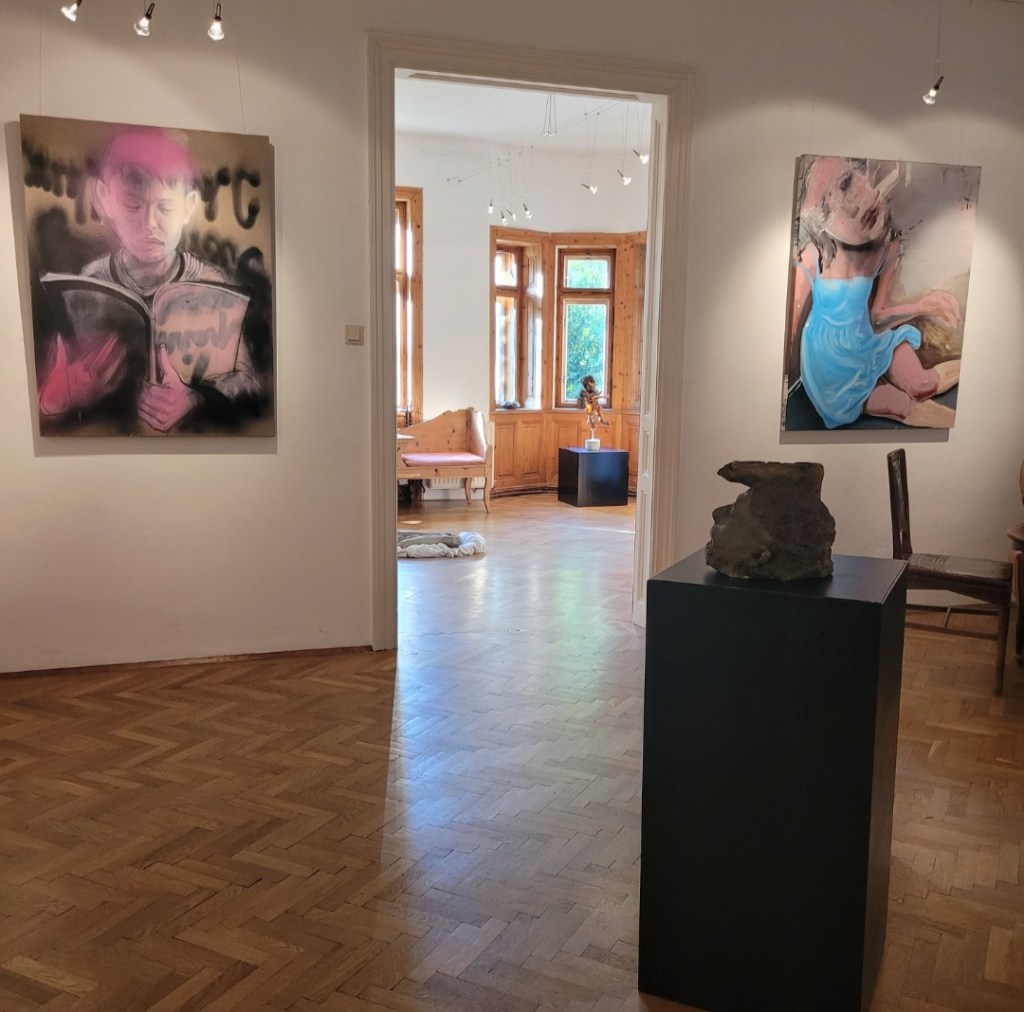
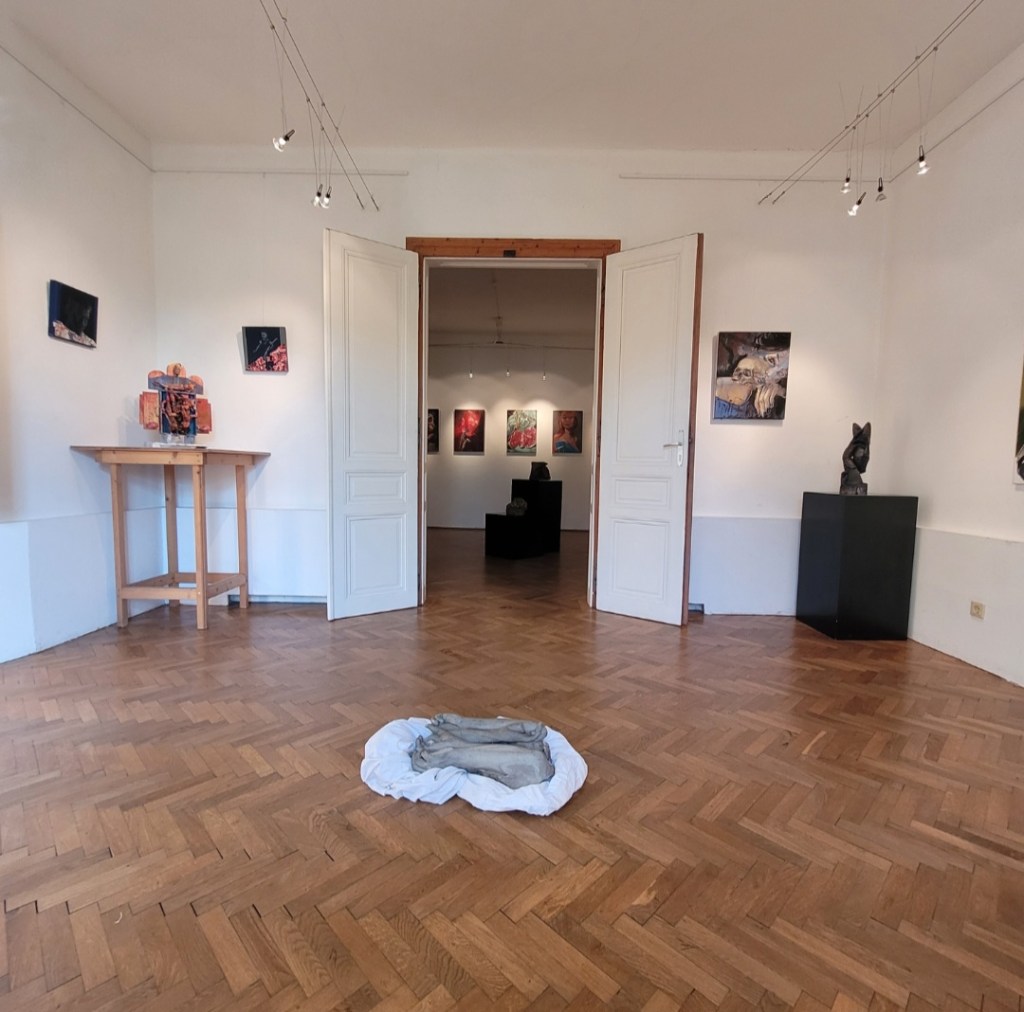
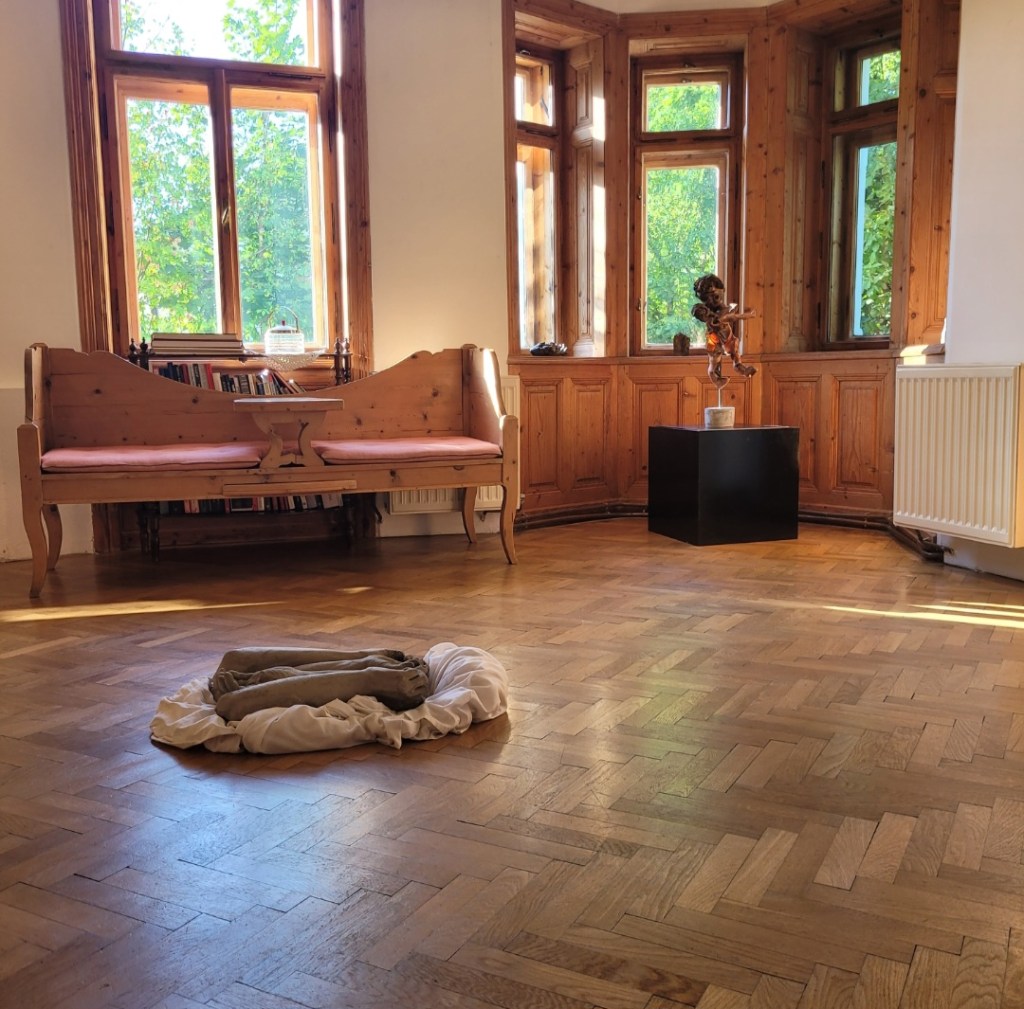
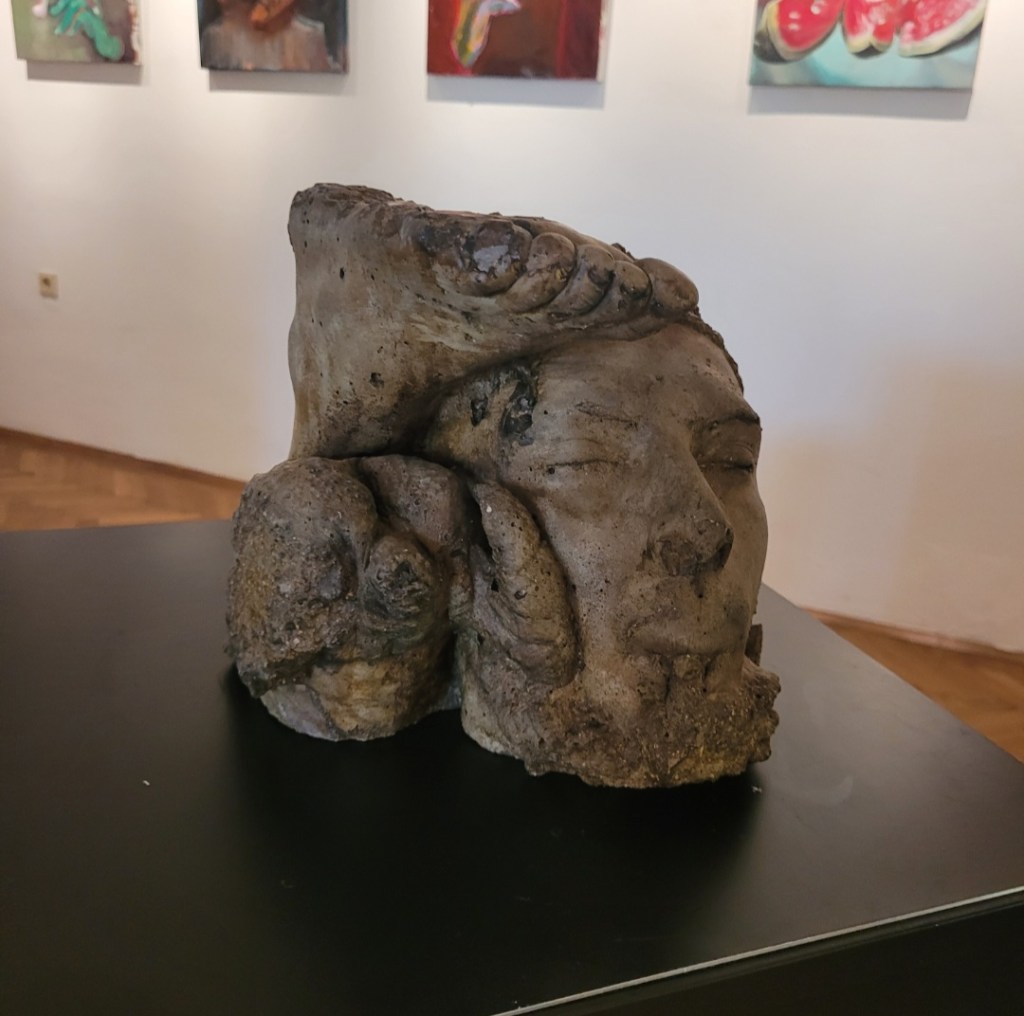
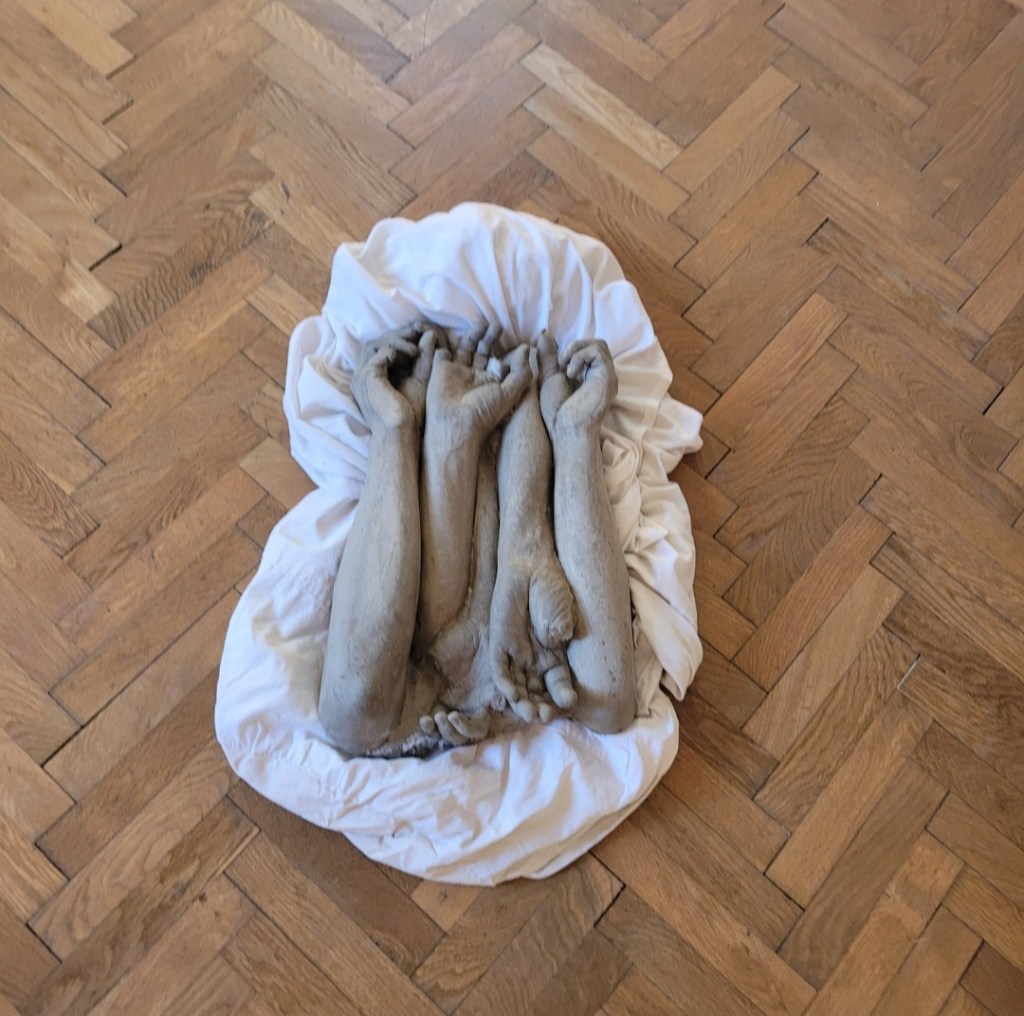
The sculptures of Gian-Battista Lombardo offer another angle on the topic of the Eternal Child. The sculptures evoke at the same time the playful construction and deconstruction of the body as expression and emotion but also refer to a certain form of liturgy. Schiele’s aesthetic was inspired by religious iconography but also by the ancient toys he was collecting… he was “an eternal child”… broken by his jail time and later by the war. The works of Gian-Battista are a good summary of this smash of innocence and imagination against reality and adulthood… from the cult of an eternal youth to the denial of death. The use of fire or raw material like concrete introduces a contrast and a form of elementary conflict… a game of war… inside-out. For an “eternal child” it is also a way to question childhood today and how to be innocent in a world moved by instabilities, risks and eternal restarting…
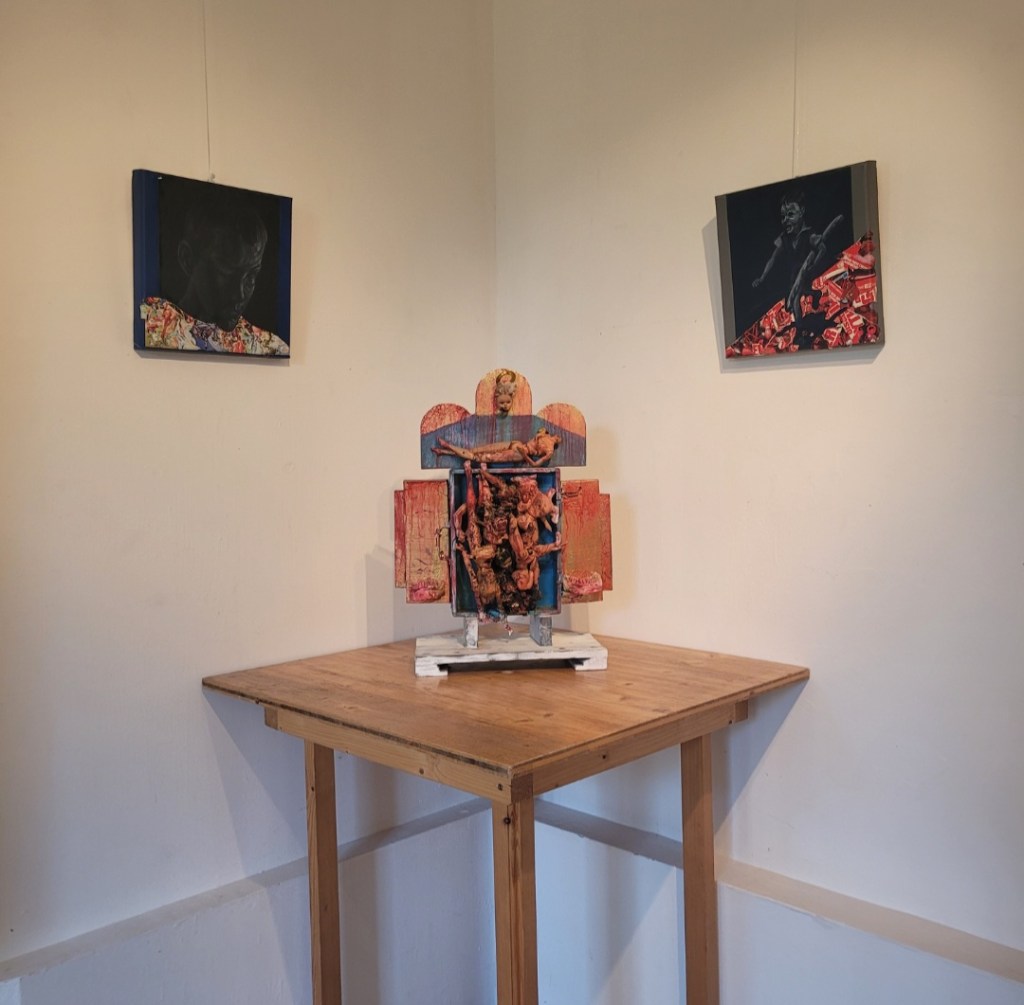
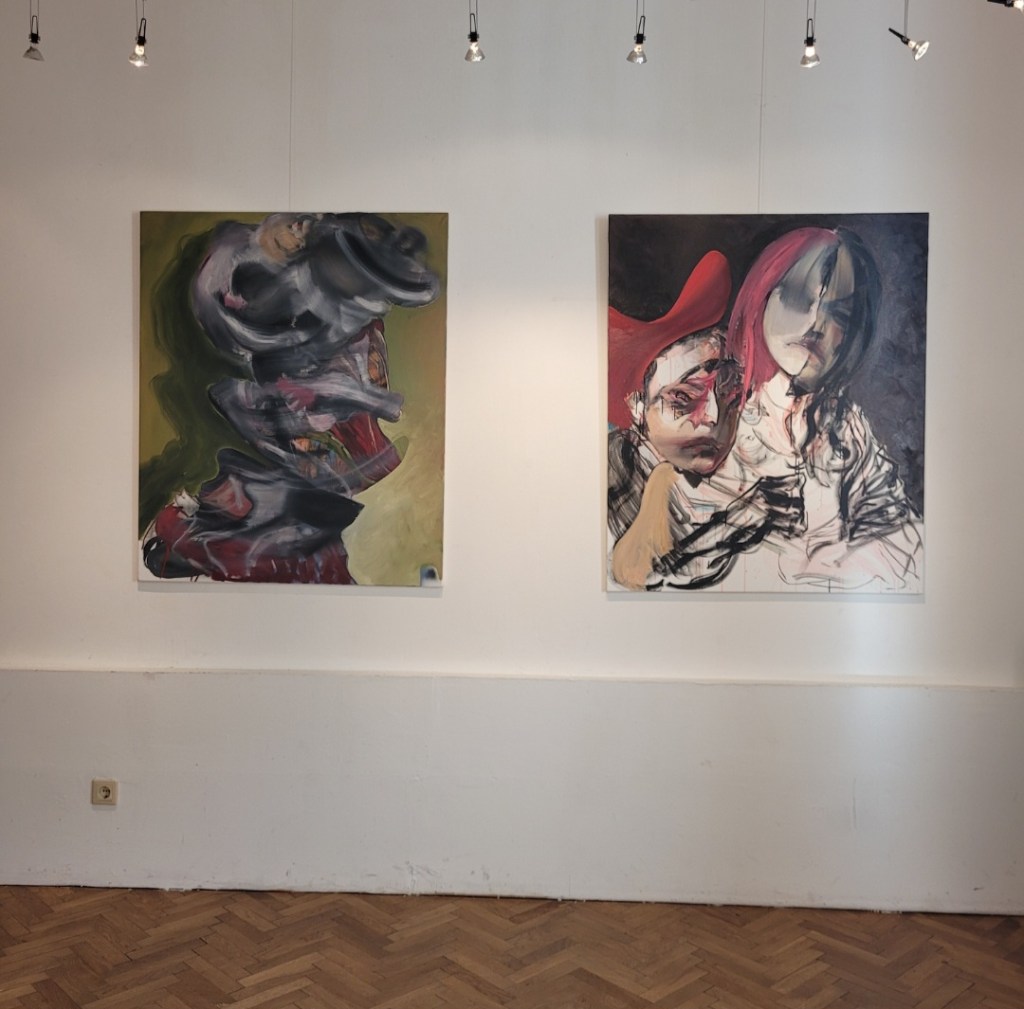
Both artists, thus enter a dialogue like a vanitas and an ode to life, peace and remembering… a message to our inner child… We, eternal children…
“Ich, ewiges Kind,
ich folgte stets den Gang der brünstigen Leute und wollte nicht in ihnen sein,
ich sagte; – redete und redete nicht, ich lauschte und wollte sie stark oder
stärker hören und hineinsehen.
Ich, ewiges Kind,
ich brachte Opfer anderen, denen, die mich erbarmten, denen, die weitweg
waren oder mich Sehenden nicht sahen. Ich brachte Gaben, schickte
Augen und flimmernde Zitterluft ihnen entgegen, ich streute ihnen überwindbare
Wege vor und, – redete nicht. – Alsbald erkannten einige die Mimik
des Hineinsehers und sie fragten dann nicht mehr…”
Egon SCHIELE
Die Ausstellung ist eine Hommage an Egon Schieles berühmtes Gedicht „Ich, ewiges Kind“. Es ist auch eine Anspielung auf die Werke von Egon Schiele, der seine Reifezeit in Neulengbach einläutete, unter Verwendung einer einzigartigen Ikonographie und Darstellung der Gesichter und Körper … eine Form von Unheimlichkeit, Genie und Heiligkeit (z.B. die tote Mutter als Madonna mit Kind)… am Rand Leben (Jugend) und Tod: “Ich bin ein Mensch – Ich liebe den Tod Und liebe das Leben.“
Die Gemälde von Tomáš Jetela sind eine Repräsentation des Körpers als Ausdruck des Selbst, wie sie seinerzeit von Schiele eingeführt wurde … mehrdimensional. Die Figur ist gleichzeitig die Bestätigung eines Wesens und einer Sache… und stellt unseren Platz in der Welt, unser Bewusstsein und Selbstbewusstsein in Frage. Durch das Aussehen führt es uns zum Einsehen, zur Selbstbeobachtung… eine Einladung, in sich selbst einzutauchen und über die Rolle des Betrachters nachzudenken. Es geht um Oberfläche und Tiefe … die Auflösung einer existentielle Dualität zwischen Erwartungen und Erkenntnissen… Fälschung und Wahrheit… Zerbrechlichkeit und Stärke. Die Figur ist der perfekte (zerbrochene) Spiegel unserer eigenen Entscheidungen und Vorurteile … unserer eigenen Persönlichkeit. Es ist ein paradoxes Phänomen der Anerkennung … ein Prozess der Individualisierung in ein soziales Umfeld. Als solches kann es sich auf den Archetyp des Puer (aeternus) von Carl Jung beziehen… als ewiger Übergangszustand des Seins… ein „vorläufiges Leben“.
Die Skulpturen von Gian-Battista Lombardo bieten einen weiteren Blickwinkel auf das Thema des Ewigen Kindes. Die Skulpturen erinnern gleichzeitig an den spielerischen Auf- und Rückbau des Körpers als Ausdruck und Emotion, beziehen sich aber auch auf eine bestimmte Form von Liturgie. Schieles Ästhetik wurde von der religiösen Ikonographie inspiriert, aber auch von antiken Spielzeugen, die er sammelte … er war „ein ewiges Kind“ … gebrochen durch seine Gefängniszeit und später durch den Krieg. Die Werke von Gian-Battista sind eine gute Synthese dieses Zusammenpralls von Unschuld und Vorstellungskraft mit der Realität und dem Erwachsensein … aus der Zeit des Kult einer ewigen Jugend bis zur Leugnung des Todes. Die Verwendung von Feuer oder Rohstoffen wie Beton schafft einen Kontrast und eine Form elementaren Konflikts… ein Kriegsspiel … von innen und außen. Für ein „ewiges Kind“ ist es auch eine Möglichkeit, die heutige Kindheit in Frage zu stellen und herauszufinden, wie man in einer Welt, die von Instabilitäten, Risiken und einem ewigen Neustart geprägt ist, unschuldig bleiben kann …
Beide Künstler treten so in einen Dialog, von Vanitas und Ode an das Leben, Frieden und dem Erinnern … eine Botschaft an unser inneres Kind … Wir, ewige Kinder…
More info / Mehr info:
https://www.instagram.com/tomasjetela/
 ABSTRACT MIMESIS