A major exhibition has just ended at Villa Pellé in Prague; the opportunity for a chronological and memorial stroll through the dynamic and almost symphonic work of the artist Jiří Načeradský. An emblematic and avant-garde figure of the post-war period, who left his mark on the landscape of contemporary Czech art… whether in the representation of bodies, movement or in the boldness of colors. Born in 1939 in Sedlec-Prcice and died in 2014 in Prague, he spent several years in France where he met his wife. His work is today represented in the permanent collections of the Center Pompidou.
Entering the exhibition is hearing a voice… that of the artist and the works; all from private collections. It’s an intimate and unique tribute that resonates like a reunion through the rooms, corridors and staircases of a villa… happily haunted for several weeks.
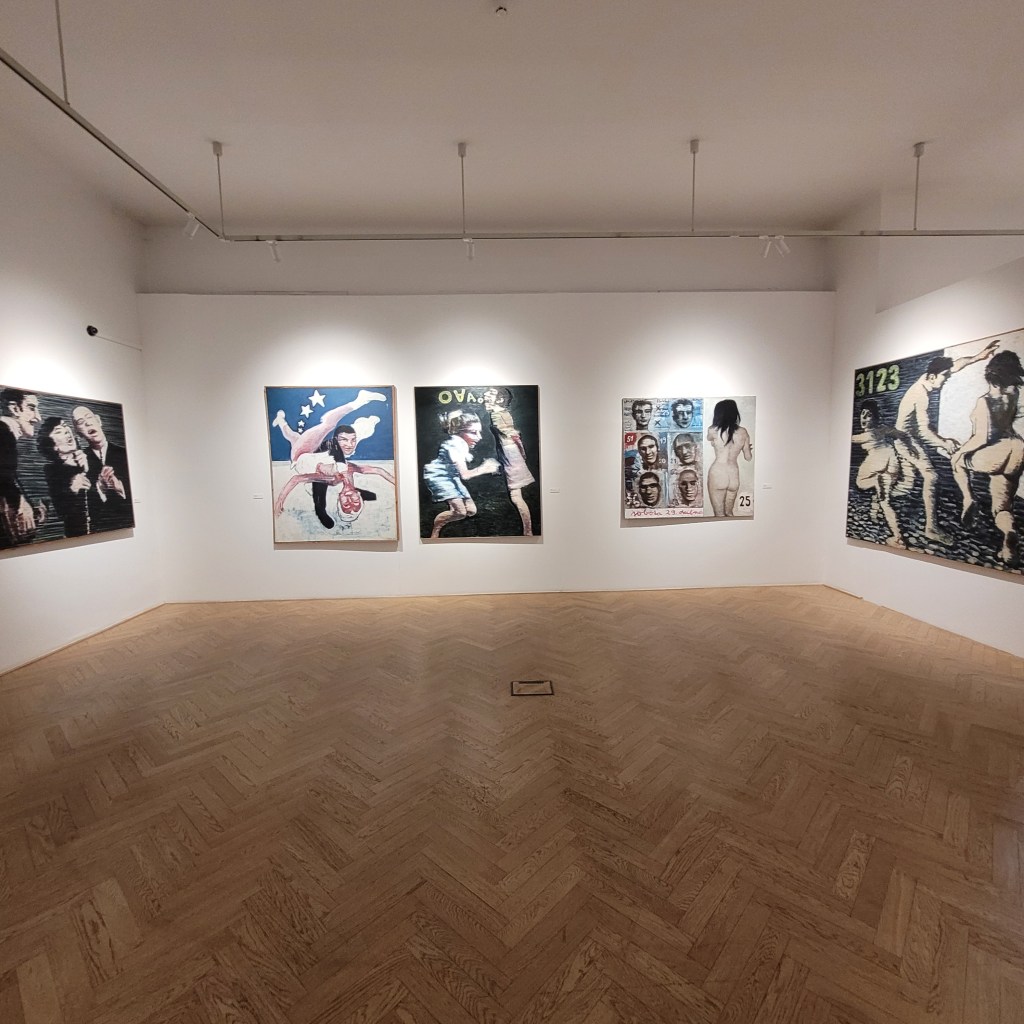
On the ground floor, the older (late 60s – early 70s) and more figurative works have real momentum. It can be sportive, musical or cinematographic, the spectator feels like they are in front of a small or large screen… in front of an iconic scene… one that we remember forever. It’s the moment where you hold your breath… a suspended moment where anything can happen… before the jump, before the goal, before the chorus, before love, before the finish line, before the end. Then the artist achieves the feat of freezing the movement and the sound that accompanies it. The image blurs, stretches, crackles… like a flashback. Life becomes a film, a program, which we could watch endlessly… a film which unfolds, image after image, and which we rewind. At the same time, these visual episodes have an audio impact. Sometimes presenter, singer or actor… the canvas speaks to the viewer and the frequencies intersect.
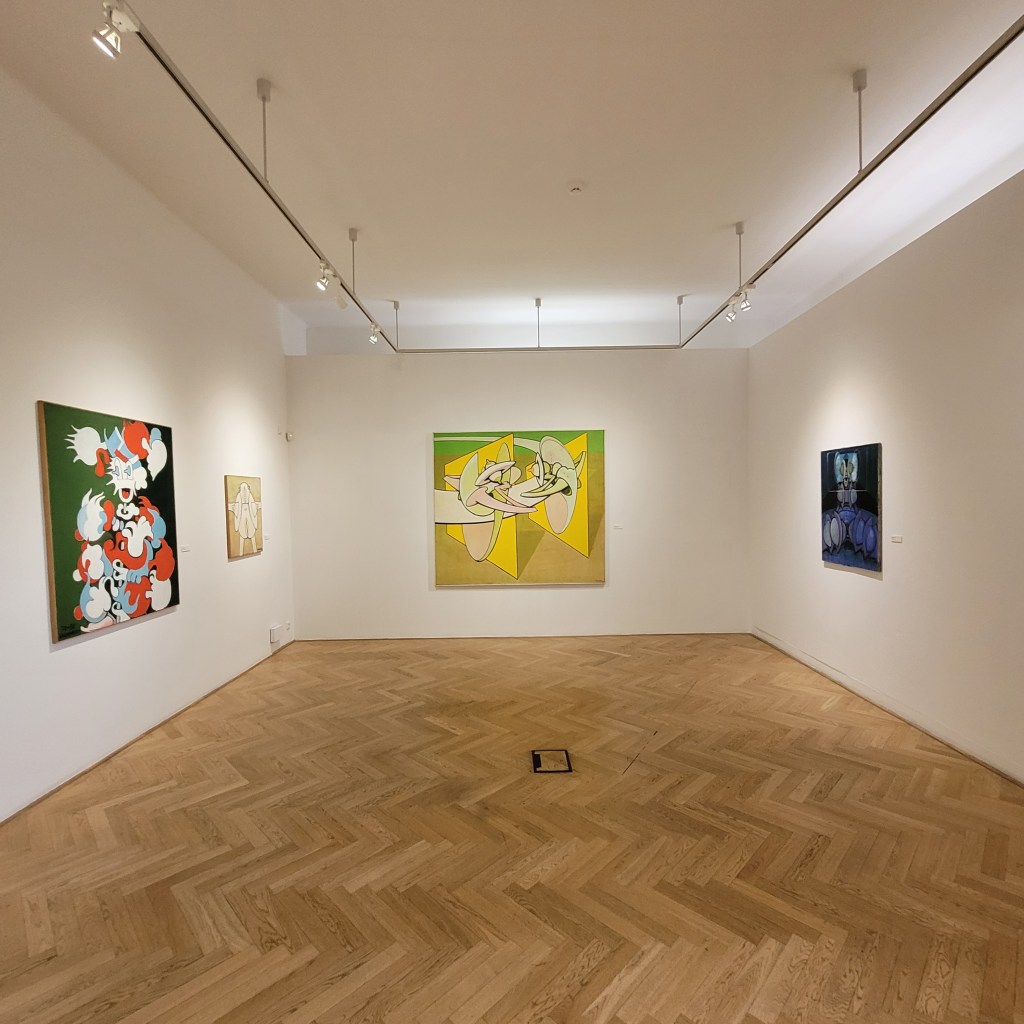
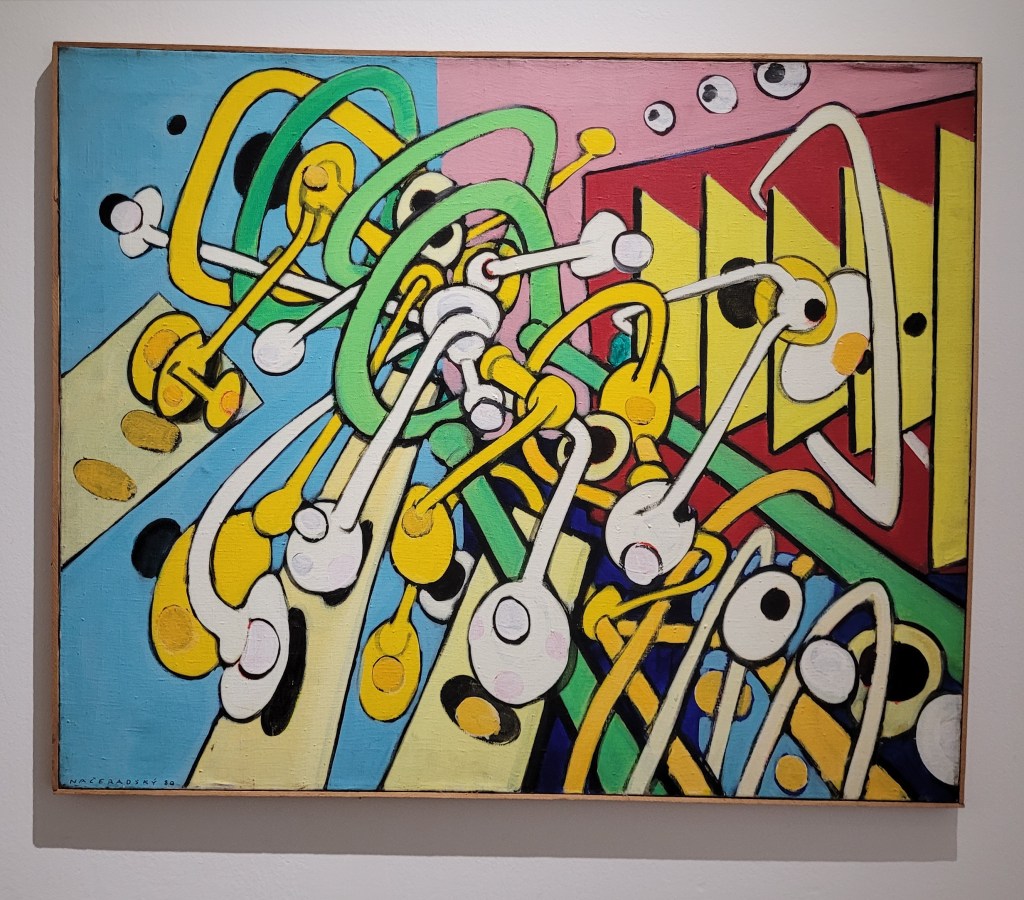
On the first floor, we find later works (from the mid-70s to the 80s) marked by an abstraction of bodies and metamorphoses. Anthropomorphic geometries, sometimes animal, sometimes instrumental, punctuate compositions in daringly tangy colors (yellows, oranges, blues, pinks, etc.). The femme fatale presents herself with features and attributes of pop eroticism and science fiction. They could be devouring praying mantises from deep space… another planet. They are fictions of an era when man conquers space and the cinema of Kubrick or Tarkovsky makes this future plausible. Mutation or evolution, bodies have something cosmic and almost comical with a prevalence of breasts and mouths in unexpected contexts and positions. This is a new biology and a new anatomy that is credible and seems completely natural. The creature-men could come straight out of a cartoon or an animated film and form a new futuristic and technological society. The works of this era are a projection of humanity, of a common future in a bipolar Europe divided by impassable borders. In itself, imagining tomorrow is a freedom from the present and the place for an artist who could not leave his country for political reasons. The “Elsewhere” is expressed on the canvas like a waking dream.
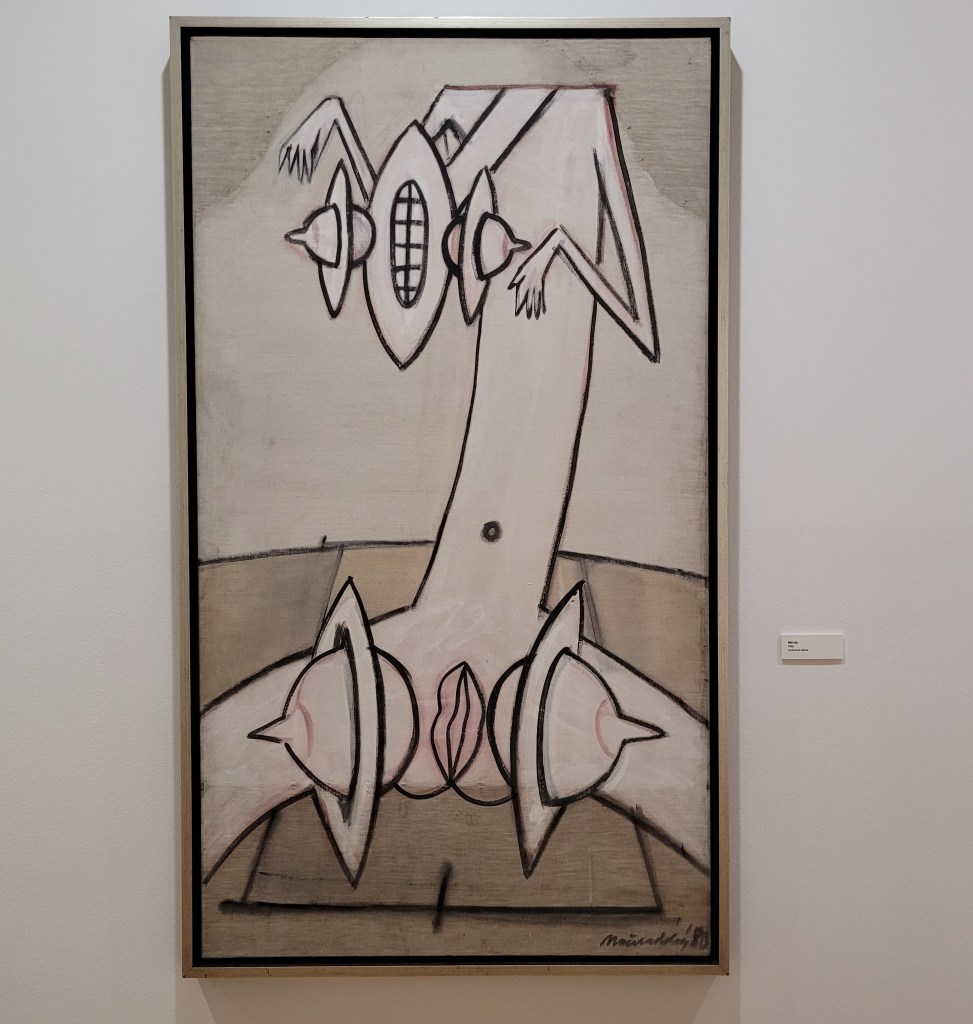
Through these paintings, the movement is still expressed, but differently, from the previous period. Here, we come closer to the decomposition of movement, shapes and light initiated by Kupka. It is part of the musical and sonic lineage of lyrical abstraction. Circular, tubular, instrumental… the compositions can be listened to like a piece of jazz… the colorful vibration of a clarinet or a saxophone… through a transistor radio from the 80s… and the spectator can feel the dance of the bodies through the canvas. The figures become endearing and familiar… a piece of everyday life sublimated by the joy of entertainment.
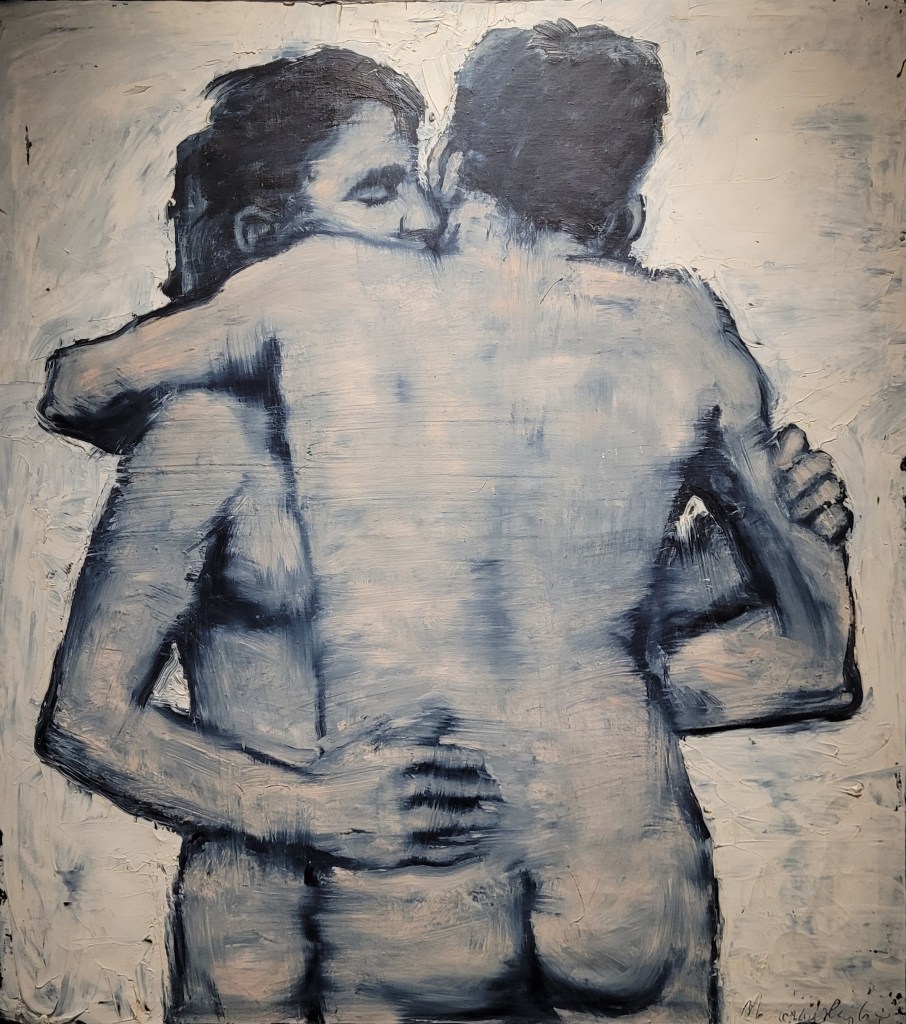
Finally, on the top floor, under the attic, are the later works, from the 90s and 2000s, which reveal everything and give meaning to the title of the exhibition. These paintings have a straightforward erotic charge like a survival of all the torments of history… a form of eternity. As such, these paintings constitute a high point in the artist’s score which culminates here in both love and despair… like alcohol. It is a deeply existential and brutal conclusion… the unison of a cry of joy and pain… the unveiled beauty of mankind.
More informations:
 ABSTRACT MIMESIS